
Walk into any Kerala home with a grandmother in it and mention cheruthen, and you will get a story — a fever cured, an eye remedy, a spoonful kept aside for the youngest child. This is the honey of the tiny stingless bee, and it behaves like nothing else in the hive world.
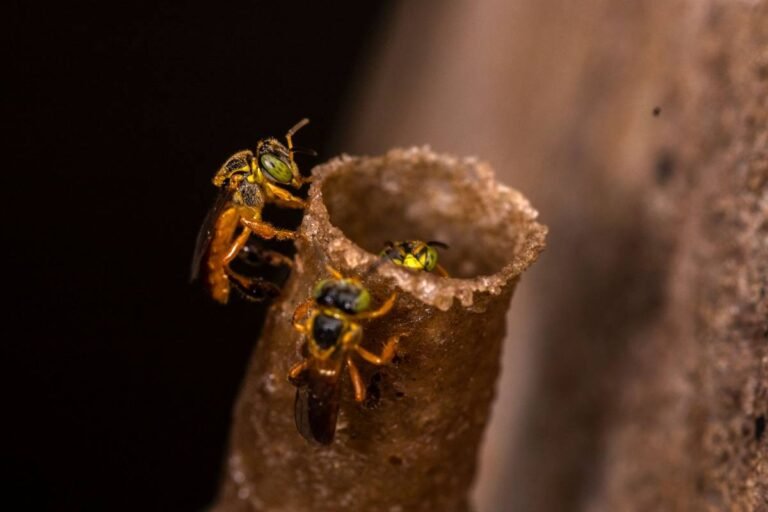
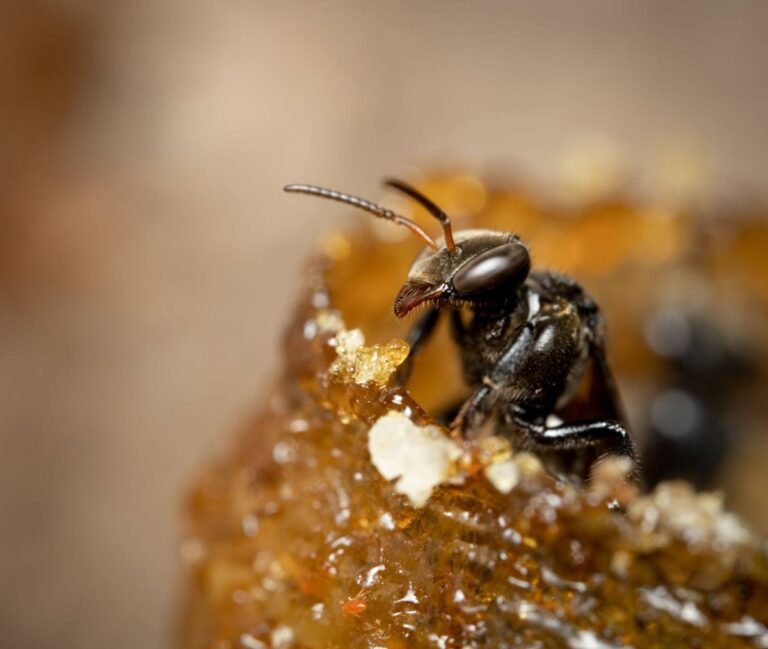
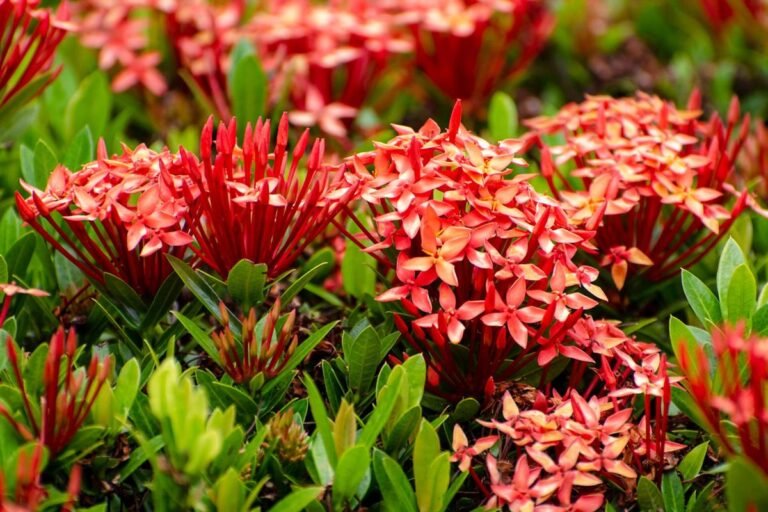
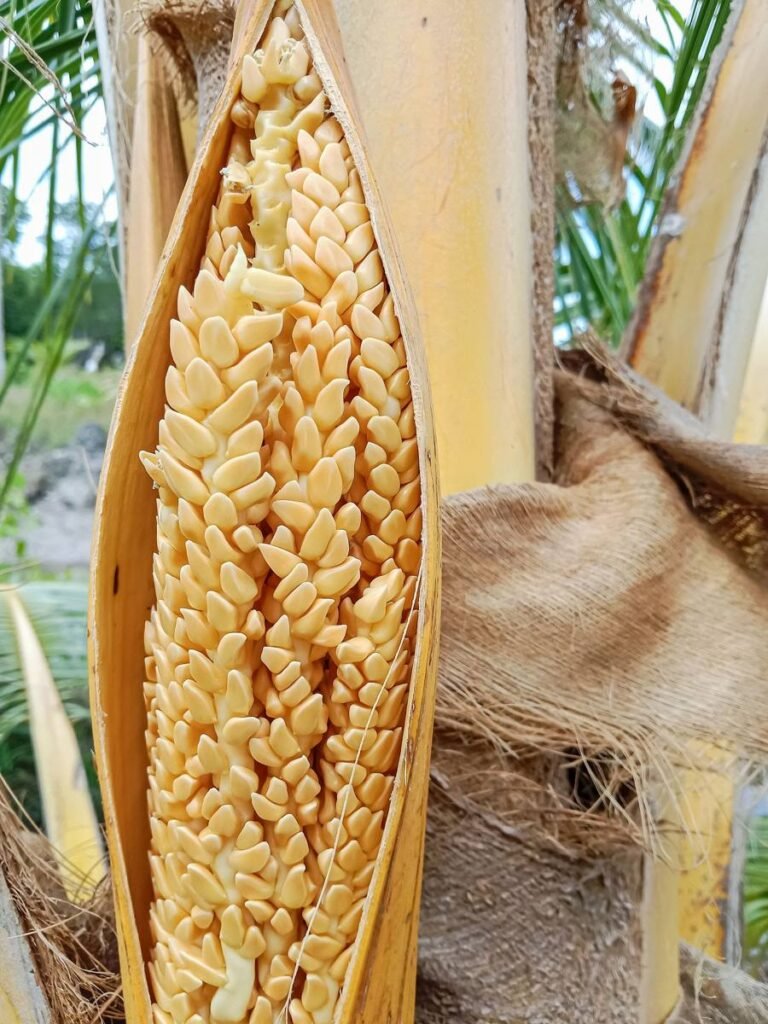
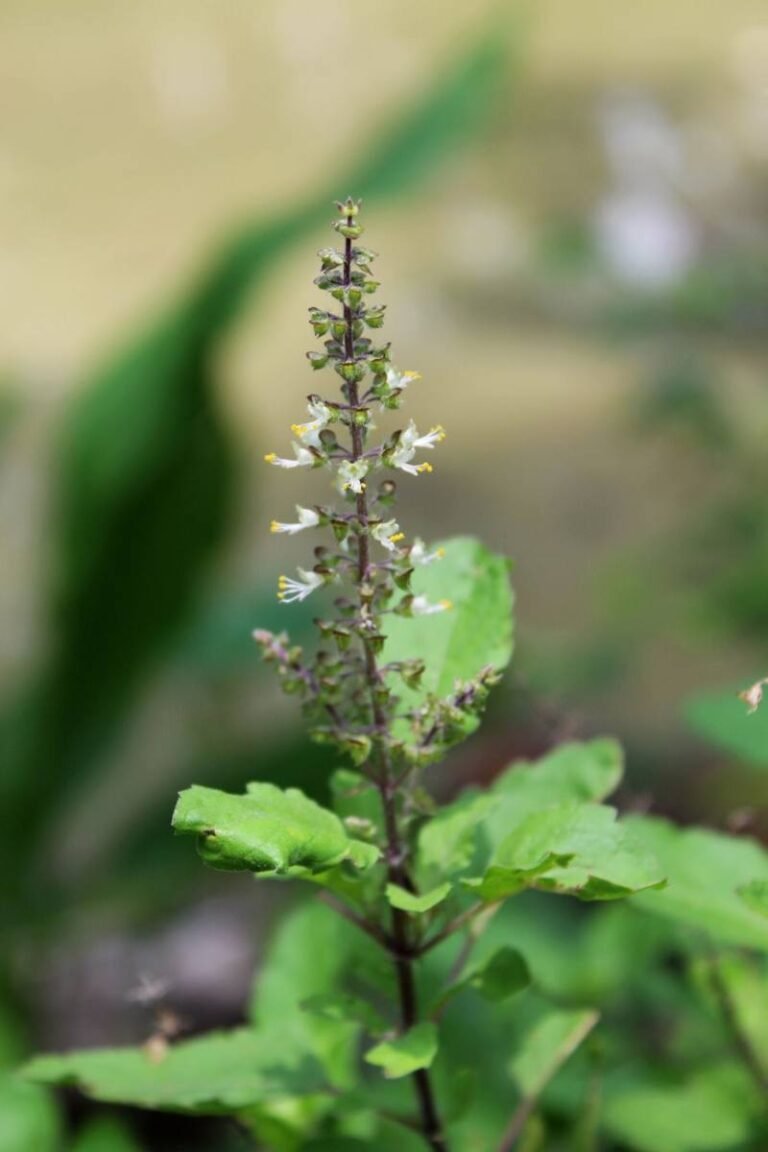
From our own yard: the bees, their guarded doorway, and the little flowers they love.
The bee behind the honey
Cheruthen comes from a tiny bee that most people have never looked at closely: the Indian stingless bee, Tetragonula iridipennis, known in Malayalam as cherutheneecha — literally “small bee.” It is barely three to five millimetres long, smaller than a grain of rice, and, as the name promises, it has no sting at all. Instead of a hive full of hexagonal comb, these bees build clusters of little wax-and-resin pots to store their honey, tucked inside tree hollows, wall cavities and hollow logs.
Keeping stingless bees is a craft of its own, called meliponiculture. Because the bees are so small, they forage the tiniest, deepest flowers that larger honeybees simply cannot reach — and they don’t travel far to do it. The reward for all that patient work is astonishingly small: a whole colony produces only a few hundred grams of honey in an entire year. That single fact explains almost everything about cheruthen, including its price.
Why cheruthen tastes different
If you have only ever tasted ordinary honey, your first spoon of cheruthen is a surprise. It is thinner and runnier, because it naturally holds more moisture than honey from larger bees. And it is tangy — with a distinct sour, almost citrus edge underneath the sweetness. That sourness is not a fault; it is the signature. It comes from the plant resins and propolis the bees weave into their pots, which gently ferment the honey and give it a complexity no regular honey has.
Real cheruthen is thin, tangy and sweet-sour all at once. If a “cheruthen” is thick and simply sweet like table honey, be suspicious.
The tradition: medicine, not sweetener
Across Kerala, cheruthen has never really been treated as food. It is treated as a tonic. The classic way to take it is a single spoonful in warm water, first thing in the morning. In traditional households it has been reached for to soothe a sore throat and cough, to settle the stomach, to support recovery, and simply to keep the family well through the damp monsoon months. Because a little goes a long way, a small bottle lasts a surprisingly long time.
Modern research is beginning to explain what those households noticed. Studies on stingless-bee honey point to unusually high levels of antioxidants — the phenolics and flavonoids the bees gather along with nectar — in unusually high levels compared with honey from larger bees. That research is ongoing and it is not a health claim: cheruthen is a traditional food, not a medicine, and we would never present it as one. But it does suggest the old spoon-a-day habit was rooted in something real.
[NOTE: This article is for general information only. Cheruthen is a natural food traditionally valued for wellness; it is not intended to diagnose, treat, cure or prevent any disease. Honey should not be given to infants under 12 months.]
How to tell real cheruthen from fake
Because it is scarce and expensive, cheruthen is one of the most commonly faked honeys in the market — often it is just ordinary honey, or worse, sugar syrup, sold at a premium. A few honest checks:
- Texture: genuine cheruthen is thin and pours easily, not thick and slow.
- Taste: there should be a clear tangy, sweet-sour note. Pure sweetness with no sourness is a red flag.
- Quantity: anyone selling large jars of cheap “cheruthen” is almost certainly not selling the real thing — the bees just don’t make that much.
- Source: buy from someone who can tell you which bees made it and where. Traceability is the best guarantee.
Our cheruthen
At Thenthulli we keep more than fifty colonies of stingless bees in the hills around Trivandrum, alongside a trusted circle of local beekeepers who tend them the traditional way. Every drop is raw, unpasteurised and traced to its source. We bottle it in small formats on purpose — because this is honey to be taken by the spoonful, and respected. Shop our Cheruthen →
If you’d like to understand the wider landscape our bees forage, read about Our Bees & the Western Ghats.